Restaurant order flow: from order to kitchen to guest
04/09/26
4 min
Every order in your restaurant travels a route: placed by the guest, prepared in the kitchen, served, handed over or sent out for delivery. That route is your order flow, and it decides how your restaurant performs under pressure. When it runs smoothly, service stays fast and consistent even on your busiest night. When it fragments, the symptoms appear immediately: delayed dishes, double preparations, and staff asking each other where an order went.
The cause is rarely the kitchen itself. It is disconnected systems: an ordering channel here, a printer there, a delivery tablet beeping in the corner, and people bridging the gaps verbally. This article shows what a connected order flow looks like and how it works within Eatcard.
For many venues, the order flow starts before the first order is placed. Reservations made through your own website land directly in the platform via the reservation system, linked to your floor plan. When the guest arrives, the table is already known, so orders, booking notes and the final bill connect to the same table from the first minute.
A modern restaurant takes orders from many directions at once: the POS, QR ordering at the table, self-order kiosks, the takeaway webshop, waiter handhelds, and integrated delivery platforms such as Uber Eats and Thuisbezorgd.
Within Eatcard, every channel feeds into the same operational flow. Each order follows an identical structure into the kitchen while clearly showing where it came from, so the kitchen sees at a glance whether a ticket is dine-in, takeaway, kiosk, QR or delivery. No separate tablets, no retyping, no channel that lives outside the system. When a Saturday rush hits from three channels at once, the kitchen still works from one queue.
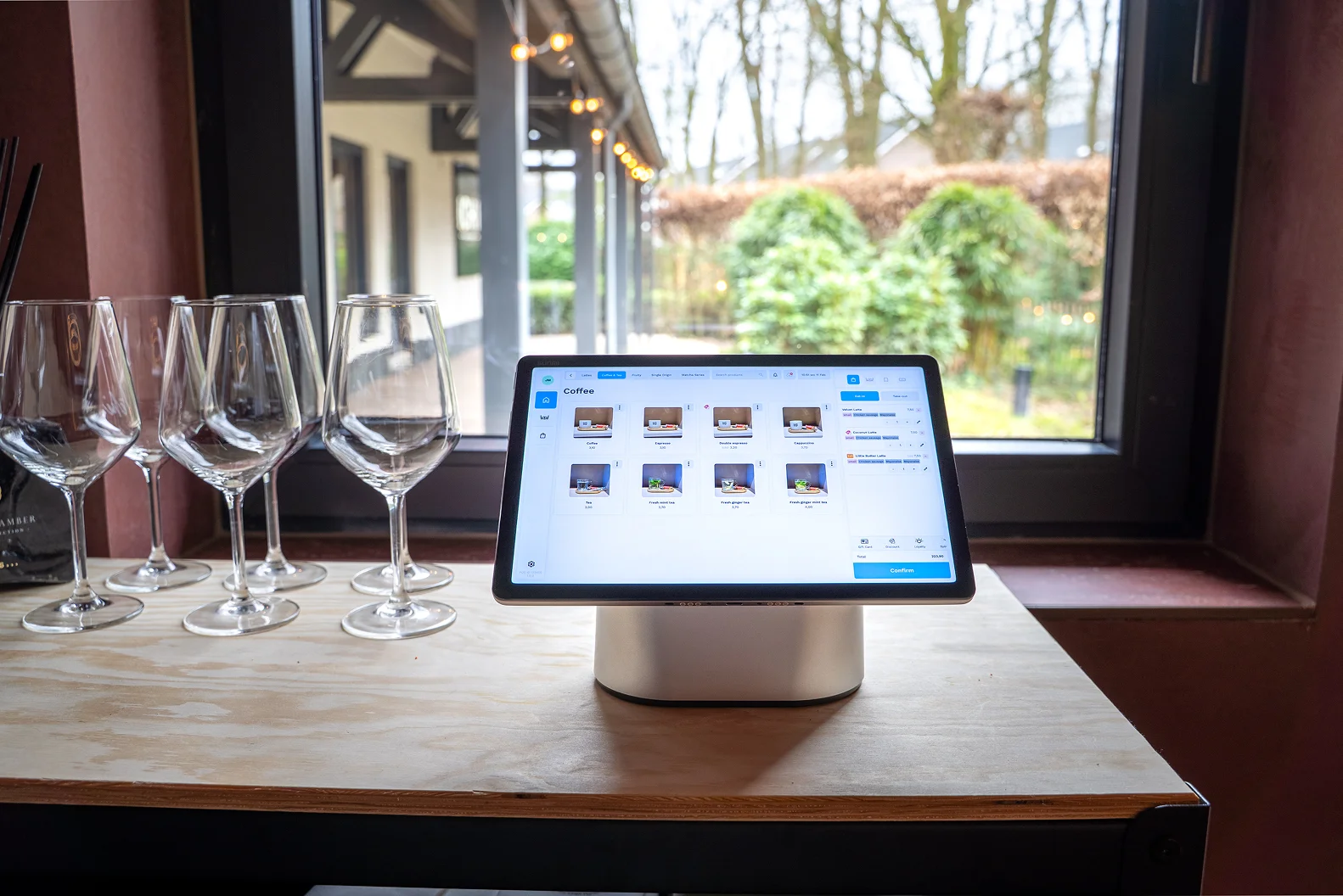
A connected order flow needs a single source of truth: the menu. Within Eatcard, you manage one digital menu that appears everywhere at once: on the QR code at the table, on the POS, on the Eatcard Waiter handheld, on self-order kiosks and on your digital menu screens. Change a price, add a dish or mark something sold out, and every channel updates that same second. No screen showing yesterday’s prices, no guest ordering a dish the kitchen ran out of an hour ago.
A strong restaurant order flow stands or falls with what the kitchen sees. Within Eatcard, orders appear on the Kitchen Display System the moment they are placed, complete with modifiers, allergens, special requests and order source. Changes update in real time, so nobody relies on shouting or memory.
Orders can be divided across kitchen stations, so cold, hot and bar each see their own work while the pass keeps the overview. Identical dishes are automatically grouped: five orders of the same dish become one clear preparation task instead of five scattered tickets.
Paper tickets, by contrast, tear, fade and hang in the wrong order, and the problems multiply when several channels run at once. Switching does not have to happen overnight though: the Kitchen Display System works alongside kitchen printers where needed, so your team transitions at its own pace.
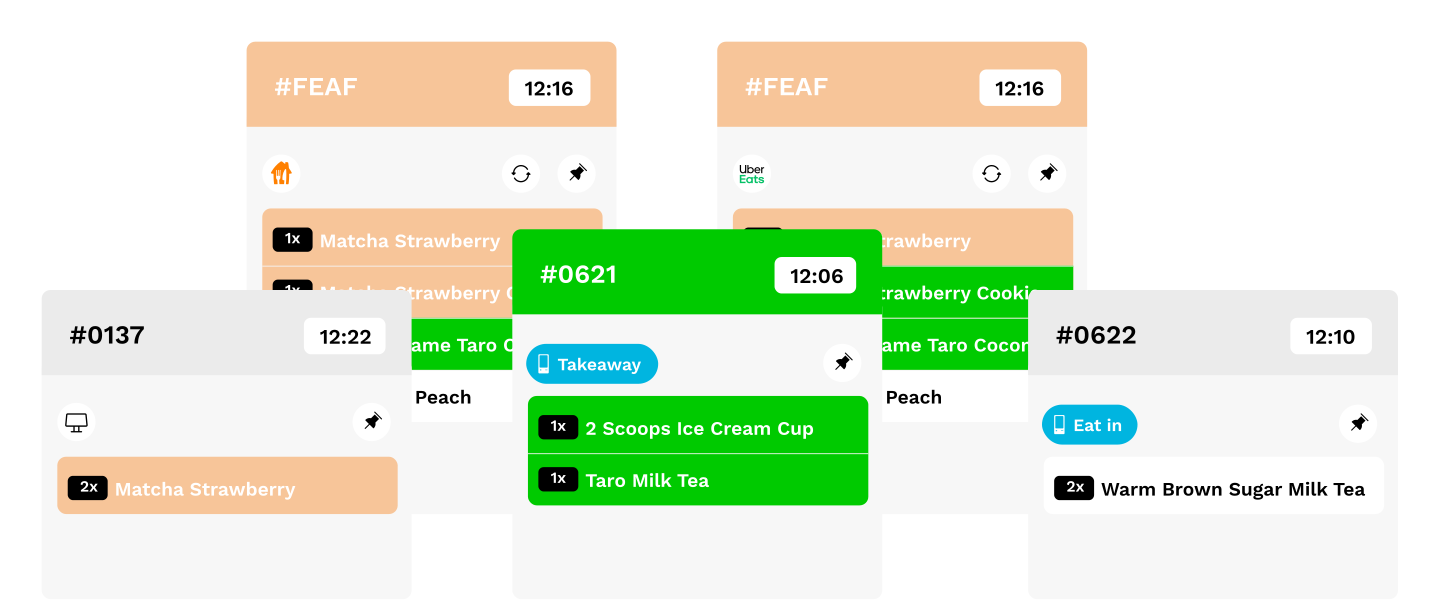
Order flow does not stop at the kitchen. Within Eatcard, the status of every order stays visible across the whole operation: front of house sees instantly whether a dish is being prepared, ready, served or delayed, without walking to the pass or interrupting the kitchen. Connected order status screens extend that visibility to guests during pickup and takeaway, so nobody has to ask whether their order is ready.
For self-order kiosks, that visibility extends into the pickup moment itself. Guests receive a digital receipt and a phone buzzer notification when their order is ready, so nobody hovers at the counter or misses their order. The counter stays calm, and staff hand out orders instead of managing a crowd. Because every stage stays connected, you control timing and communication through the entire service instead of reacting to surprises.
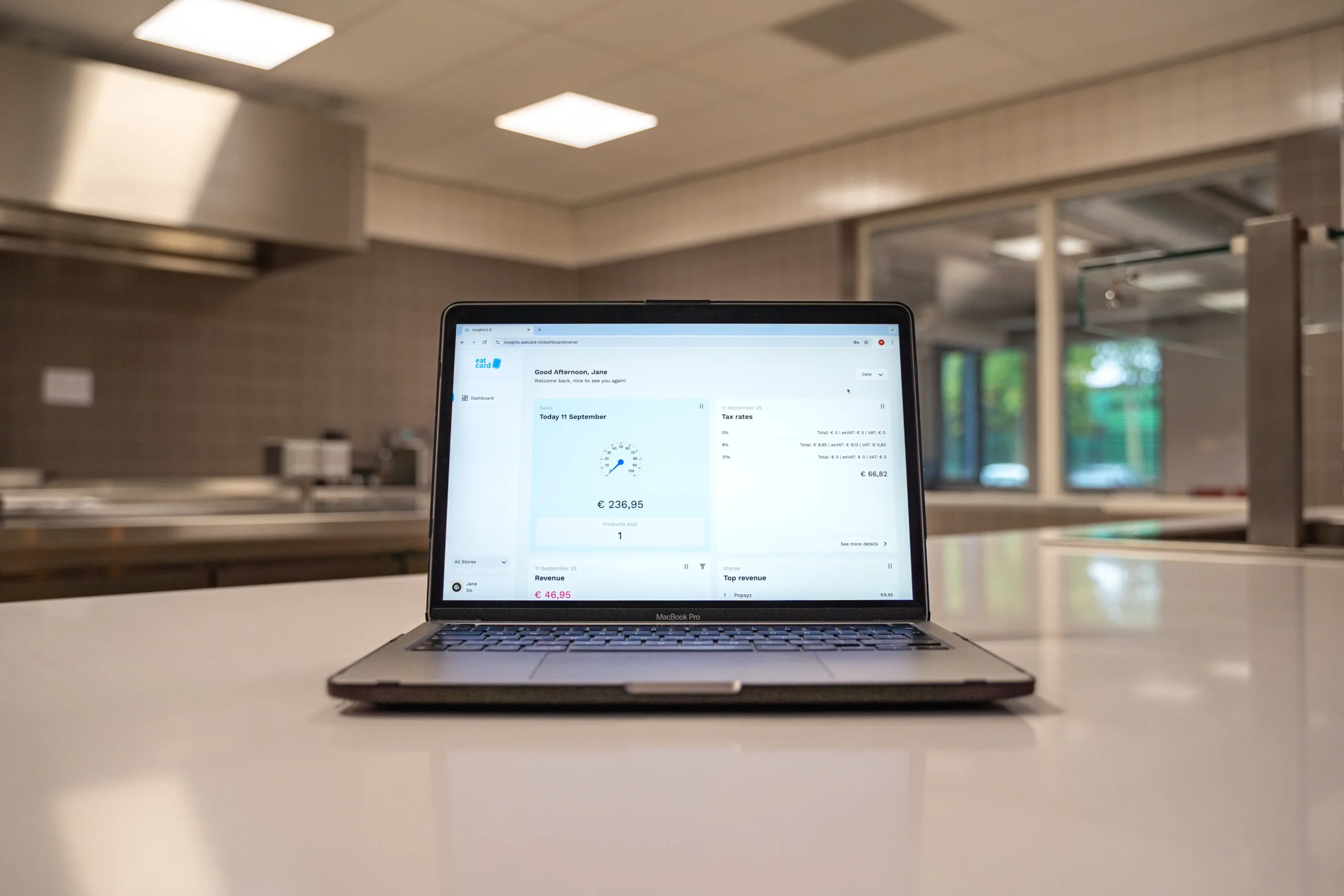
Because every order from every channel runs through one platform, your data is complete by default. Eatcard Insights turns that connected order flow into a clear, real-time picture of how your restaurant performs.
You can see your revenue and average spend at a glance, broken down by payment method, and track your best-selling products to know exactly what carries your service. Discounts and voids are shown per team member, so you keep a clear view of what is happening at the till. Sales channel reporting tells you whether the kiosk outsells the counter, how takeaway compares to dine-in, and where your revenue really comes from. And because loyalty runs on the same platform, you can also see your moolaah activity, including which products guests are claiming through the programme.
The same system that runs your service also explains it, without spreadsheets to stitch together.
The strength of the order flow within Eatcard is connection. Reservations, ordering channels, the menu, kitchen workflow, order statuses, payment and insights all run on one platform. Instead of separate systems held together by manual coordination, your team works from one operational environment. The result: clearer communication, fewer errors, more control during service, and an operation that scales with your restaurant instead of against it.
Curious how Eatcard could work for your concept? Book a demo and see what Eatcard can do for your hospitality business.