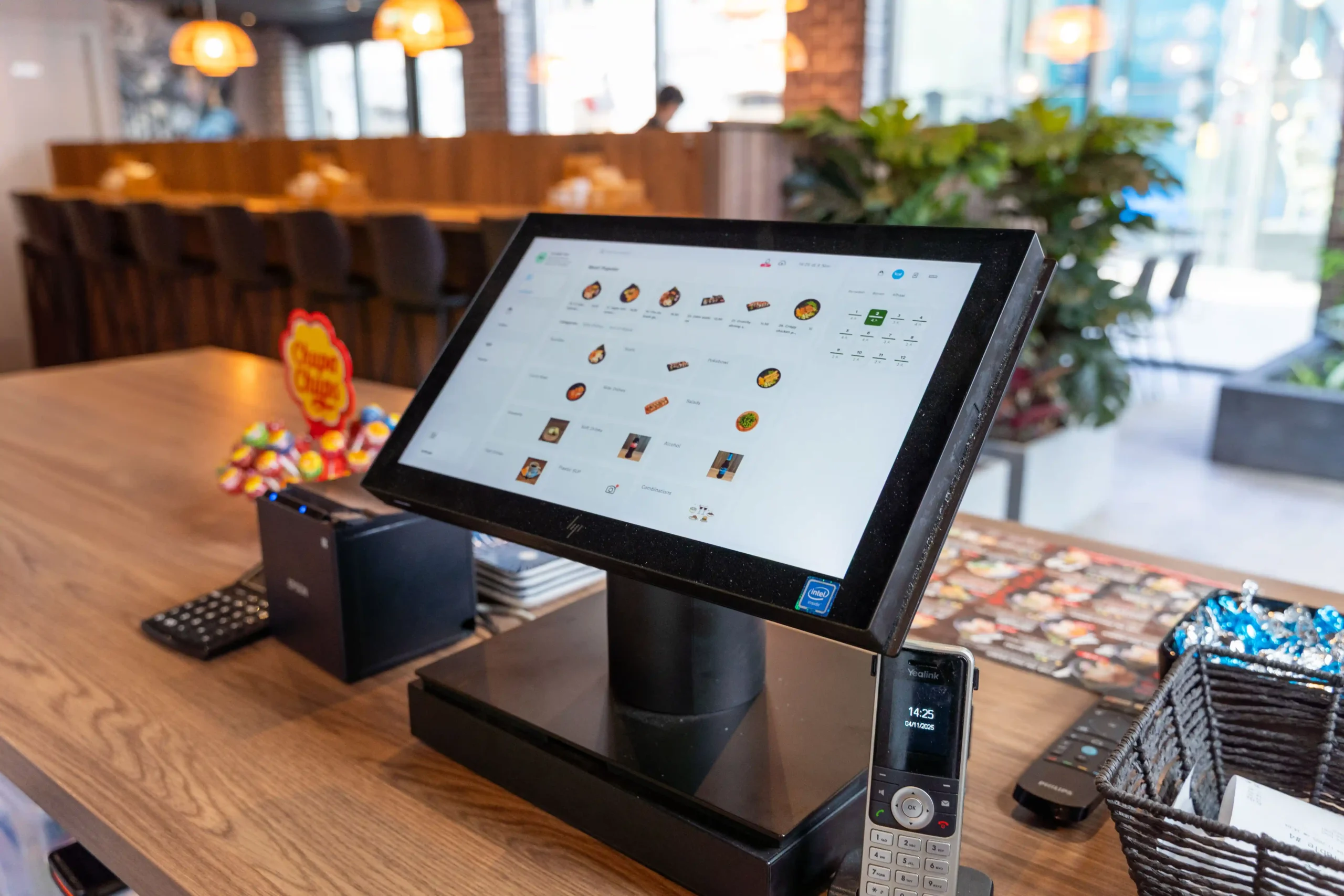
What a restaurant POS system really is
A POS system is often described as the place where a transaction happens. But in modern hospitality, that definition barely scratches the surface. A restaurant POS system is the central operational hub that connects ordering, payments, menu management, staff workflows, and reporting into one connected environment.
It is no longer just a digital cash register. It is the system that determines how smoothly a restaurant runs during a busy lunch service, how accurately orders reach the kitchen, and how clearly management understands performance at the end of the day. In practice, it connects every part of the guest journey from the moment an order is placed to the moment payment is completed.
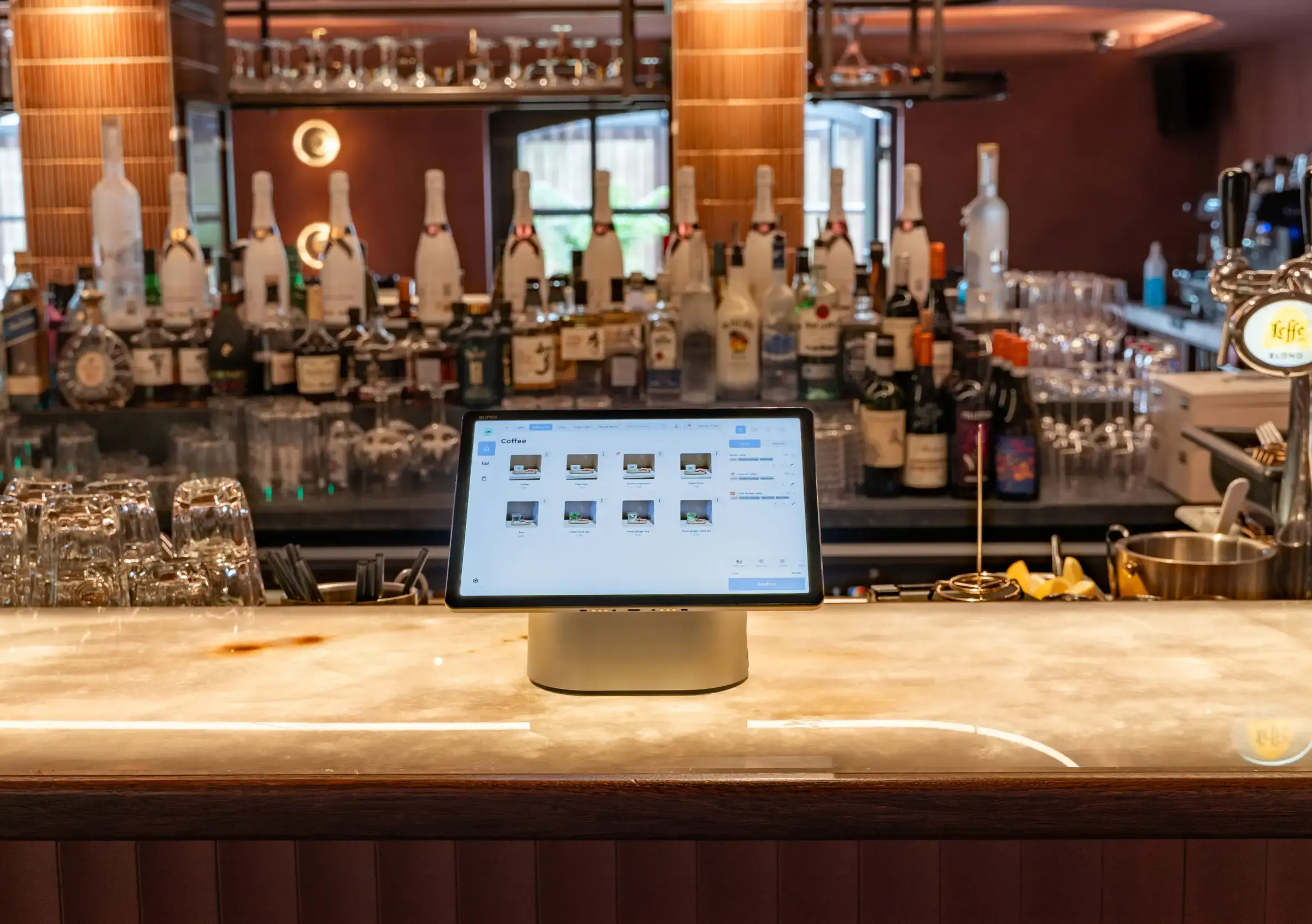
Why POS has become the backbone of hospitality
Restaurants today operate in an environment where speed, consistency, and clarity are essential. Guests expect fast service, accurate orders, and flexible payment options across dine in, takeaway, and delivery. Our POS system supports this by bringing structure into daily operations.
Instead of separate tools for ordering, payments, and insights, everything flows through one system. This reduces friction between front of house and kitchen teams and ensures that every order is processed in a consistent way.
From order taking to full operational control
Orders placed through QR ordering, self service kiosks, or handheld devices are instantly processed in the POS and sent directly to the kitchen through the KDS or printers. Payments are linked to the same order flow, and insights update in real time.
This creates one continuous process within Eatcard, where ordering, kitchen execution, and payment are fully aligned.
Why connected systems matter more than ever
One of the biggest shifts in hospitality technology is the move away from standalone tools toward fully connected restaurant operations. A POS system is no longer just a place where orders and payments are processed. It has become the central system that connects QR ordering, self service kiosks, kitchen display systems (KDS), payments, takeaway, and insights into one operational flow.
This changes how restaurants operate on a daily basis. Orders placed through QR ordering or kiosks flow directly into the POS and are instantly communicated to the kitchen through the KDS. Payments, order management, and insights remain connected throughout the entire process, reducing manual actions and minimizing the risk of mistakes during busy service hours.
By centralizing these operational processes into one system, restaurants gain more than efficiency alone. They gain a clearer overview of performance, smoother communication between teams, and a more scalable way of operating without adding unnecessary complexity.
The role of the POS in scaling operations
As restaurants grow, operational complexity increases. More orders, more staff, and more service channels require a system that keeps everything structured and consistent. Within Eatcard, the POS ensures that this structure remains in place.
All core operations: ordering, payments, kitchen communication, and insights, are managed through one system. This allows restaurants to scale without adding unnecessary complexity or relying on multiple disconnected tools. The result is better control over daily operations and a more stable foundation for growt.
Why POS is no longer just a tool, but a foundation
The role of a POS system has evolved significantly. It is no longer just a place to process payments. It is the foundation of how a restaurant operates day to day.
From order flow and kitchen communication to staff coordination and performance tracking, everything is connected through one system. Restaurants that adopt this approach gain more than efficiency. They gain control, clarity, and the ability to scale without increasing operational complexity.
For restaurants looking to understand the costs and benefits of an all in one hospitality platform, explore the Eatcard pricing page for a full overview of available solutions, features, and pricing options.