QR ordering in your restaurant: your guests choose
26/08/26
5 min
QR ordering is sometimes presented as a choice between technology and hospitality. It is not. With Eatcard, QR ordering is an extra channel on your table, not a replacement for your team. Guests who want to order from their phone can. Guests who prefer to order with your staff simply do, and your team takes the order on a handheld at the table. Both orders land on the same bill, the same POS and the same kitchen screen.
That flexibility is the whole point. Here is how it works and what it does for your venue.
Every table gets its own QR code. The guest scans it with their camera, no app needed, and sees your live menu on their own phone: photos, descriptions, allergens and current prices. They order and pay whenever they want, and the order arrives in real time on the POS and the Kitchen Display System.
Multiple guests at the same table can order at the same time from their own phones. Everything syncs to one table and one bill, so a group of eight ordering in three waves is no more work for your team than a single order.
And because QR ordering is part of the Eatcard platform rather than a separate tool, you manage one menu. Change a price or mark a dish sold out, and it updates on every table, every kiosk and your takeaway webshop at once.
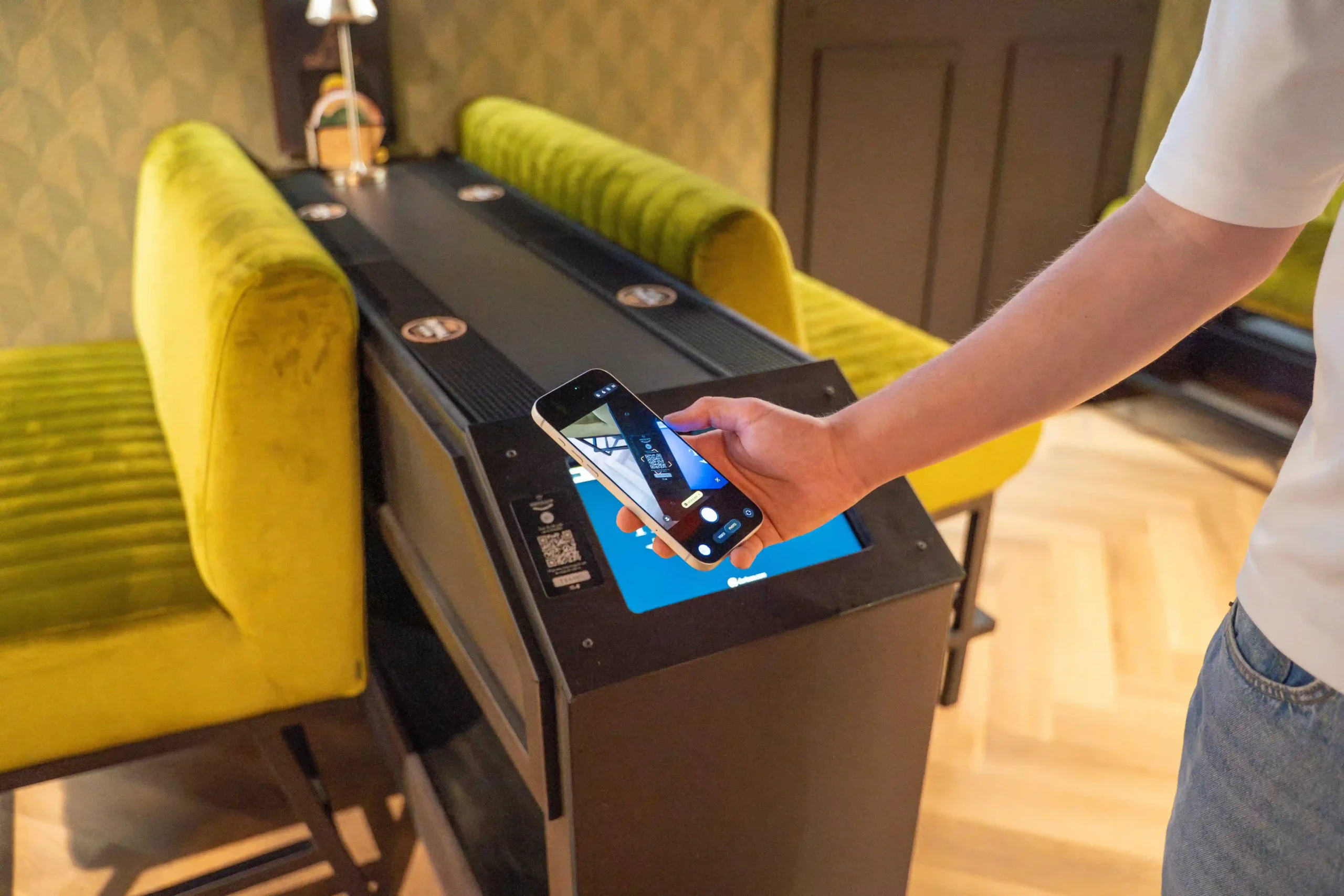
QR ordering takes over the keying-in, not the hospitality. Your staff still welcomes guests, explains the menu and advises on wine. The difference is what happens after the recommendation: instead of walking to a till to enter the order, your team confirms it on the Eatcard Waiter handheld right at the table, or the guest places it via QR themselves.
You decide the mix per moment. Full service on a quiet Tuesday, QR doing the heavy lifting on a packed Saturday terrace, or both at once: staff taking the first order personally while guests handle their own reorders through QR. There is no setting to switch, the channels simply work side by side.
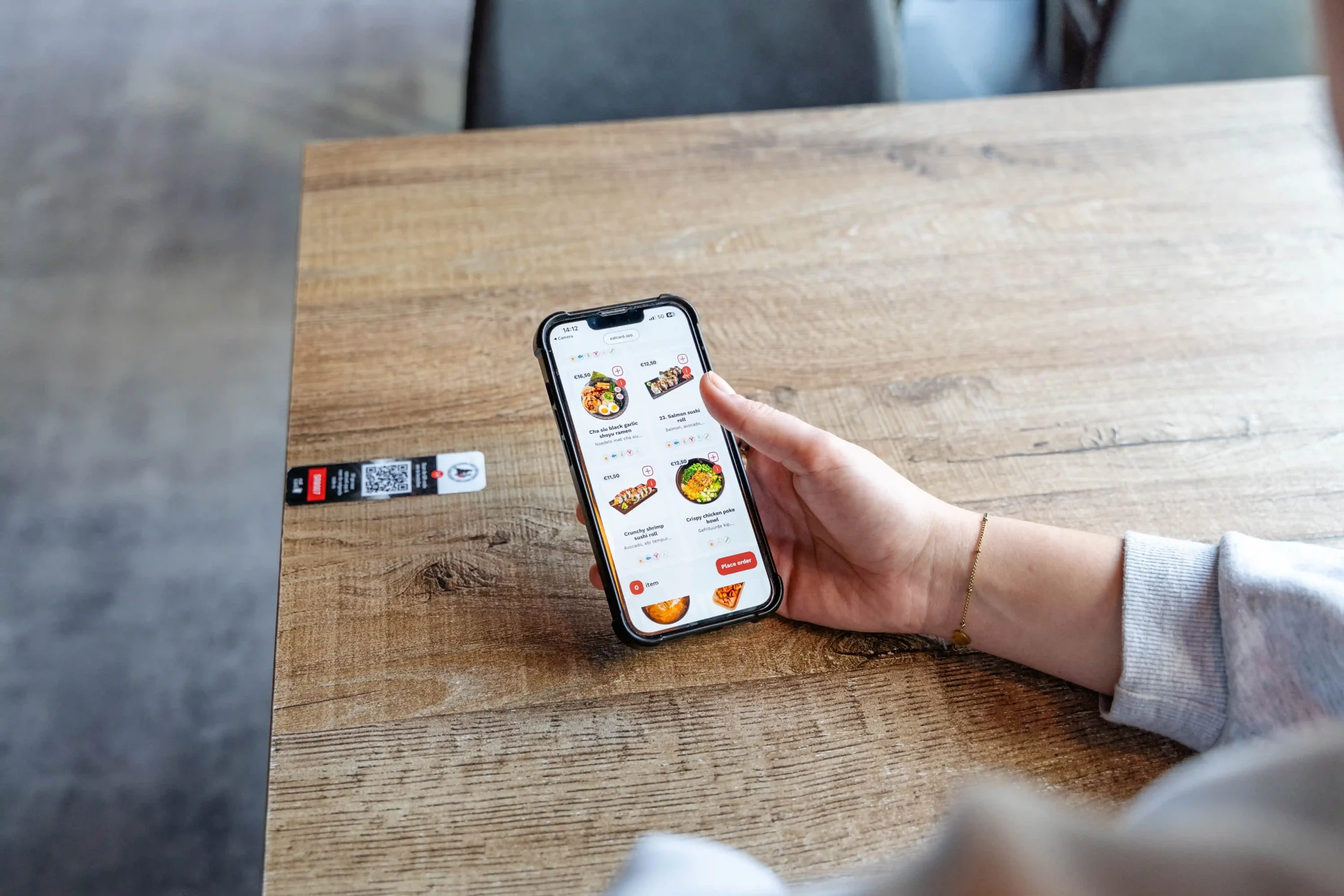
Reorders that actually happen. The second round of drinks gets ordered at the moment of impulse, not ten minutes later when someone walks past. In concepts with many rounds, such as all you can eat, Korean BBQ, hot pot and a full terrace on a sunny afternoon, this alone changes the pace of a shift.
Higher average spend. A well-built digital menu sells: appealing photos, a suggested side with the main, most popular category and promotions. Guests order more generously when the suggestion is always there.
Time back for your team. Every QR order is an order nobody had to take down and retype. During peak hours, that time goes to serving faster and paying real attention to tables.
Fewer mistakes. Guests enter their own order, including notes and allergens. What the kitchen sees is what the guest meant.
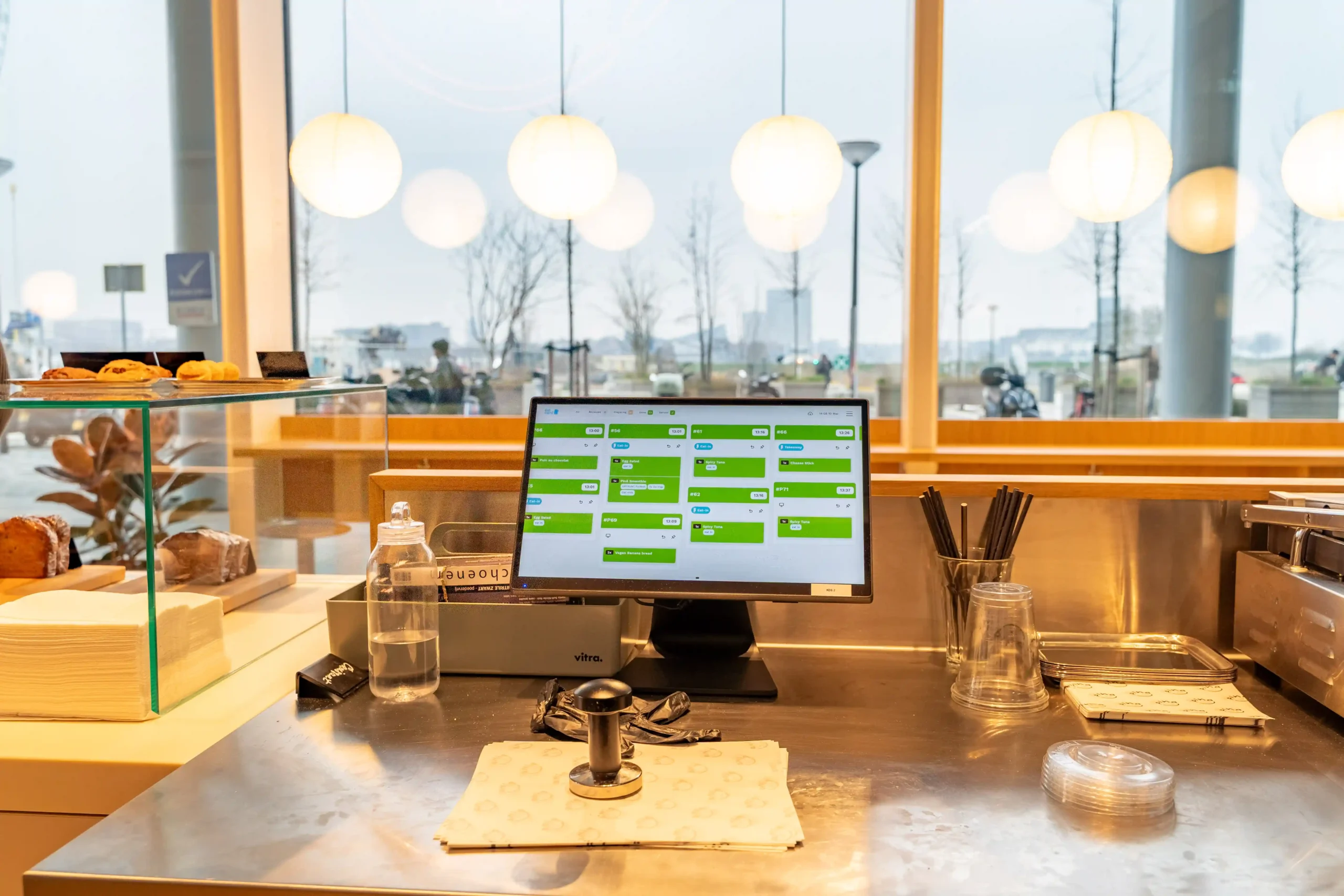
Nowhere does QR ordering pay off faster than outside. A terrace is your most profitable space on a sunny day and your hardest to serve: tables are spread out, every order means a long walk, and your team cannot see half the guests from the door. With a QR code on every terrace table, those problems disappear at once.
Guests order the moment their glass is empty, without trying to catch someone’s eye from the far corner. That matters outside more than anywhere, because terrace guests stay seated longer and drink in rounds, and every missed round on a full terrace is margin walking away. Payment happens at the table too, so nobody has to come inside to settle the bill, tables free up faster during peak sun hours, and walkouts stop being a worry.
It also softens the terrace staffing problem. Sunny days create sudden rushes that no roster predicts, and QR absorbs exactly that peak: the ordering scales with the number of guests, not with the number of staff you happened to schedule. Your team focuses on bringing out drinks fast and keeping tables clean, which is what guests actually notice. And when the weather turns and the terrace empties, there is nothing to switch off. The QR codes simply wait for the next sunny day.
QR ordering earns its place at specific moments rather than in specific types of venues. It works hardest when tables order in multiple rounds, because the reorder happens the instant the guest feels like it instead of whenever someone walks past. It shines during peak hours, when your team physically cannot reach every table fast enough and waiting time is the difference between a third round and a request for the bill.
It solves large groups, where eight people order from their own phones onto one bill instead of dictating one long order. It covers moments of distance, like a full terrace where every order otherwise means a long walk. And it keeps service running on thin-staffed shifts, when two people are covering the work of four.
On quiet moments, your team simply takes orders personally with the handheld, and some venues use QR only for drinks or reorders. Because it is a channel you deploy per table and per moment, you decide when it does the work and when your people do.
Curious how QR Table Order could work for your concept? Book a demo and see what Eatcard can do for your hospitality business.