In this article
Why POS pricing is so hard to compare
Ask ten POS providers what their system costs and you get ten different answers. A licence per till here, a paid module there, an installation fee, a support contract, commission on online orders. By the time the quote is complete, the price has little to do with the number on the website.
We built Eatcard to end exactly that. So instead of a general buyer’s guide, this article gives you the answer the question deserves: a real price, everything that is included, and a calculation you can check for yourself.
The Eatcard answer: €95 per month, everything included
At Eatcard you pay one fixed price of €95 per month for the complete platform. Not the basic tier. Not per module. Everything is included, and this is just a selection:
– Point of Sale (POS), your central hub for every order and payment
– QR ordering at the table
– Self-order kiosk software
– Online reservations, including deposits to prevent no-shows
– Eatcard Waiter, the handheld for ordering and payment at the table
– Kitchen Display System (KDS)
– Takeaway webshop, without commission per order
– Real-time insights across all channels
No installation fees. No paid updates. New features are part of the subscription, so the platform you buy today keeps getting better without a new invoice. Support is available seven days a week, also included.
What about hardware?
Hardware depends on your setup: how many tills, do you want handhelds, a kiosk, kitchen screens? That is why hardware is quoted for your situation rather than hidden in a bundle price. What we can promise: you will know the complete picture before you sign, and there are no surprise charges afterwards. Book a demo and we calculate your exact setup together.
What about transaction fees?
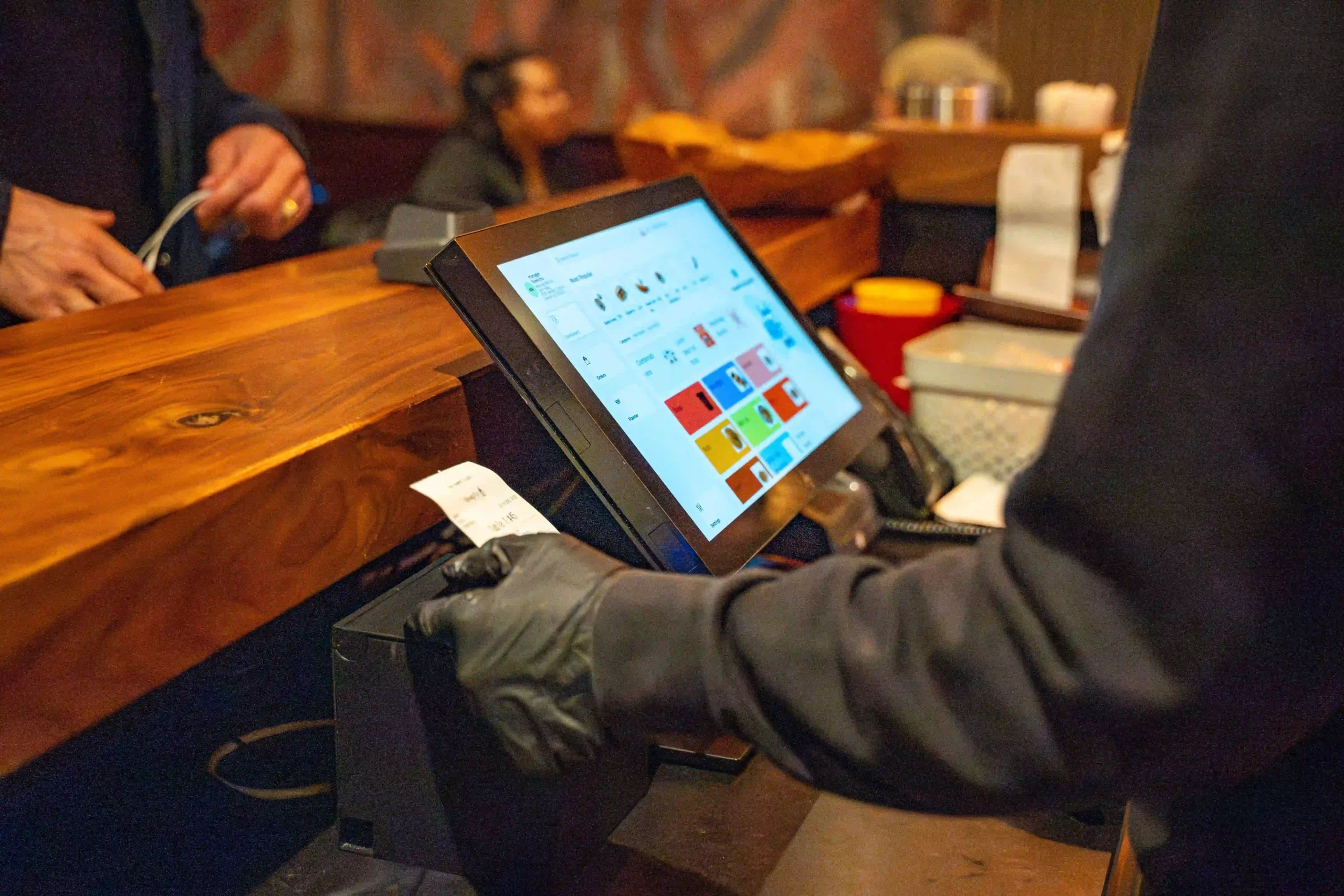
Every POS provider charges payment processing fees, and this is where hidden costs usually live. We handle it differently: we publish our rates. On our pricing page you find the current transaction fee per payment type, from debit and credit cards to mobile wallets, so you can calculate your monthly costs in advance. No asterisks, no rates that only appear in the contract.
Why one price instead of a stack of tools
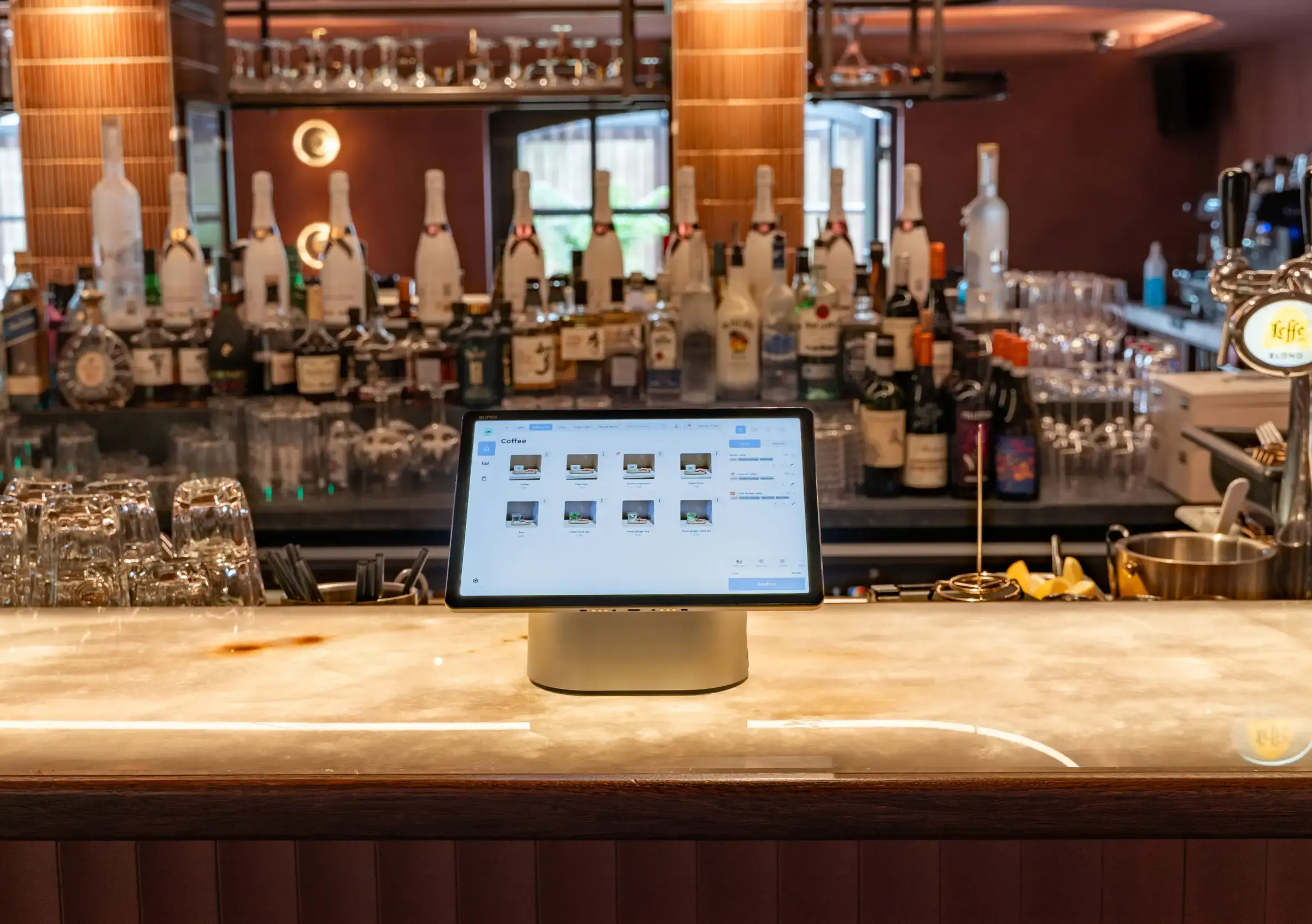
The real cost of a POS is rarely the POS itself. It is the stack that grows around it: a separate reservation system with a fee per guest, an online ordering module that takes commission per order, a kiosk from another supplier with its own licence, and integrations that break at the worst moment.
Take a venue doing 1,000 online orders per month through a commission-based ordering tool. At €3 commission per order, that is €3,000 leaving the business every month, €36,000 a year, for functionality that already sits inside Eatcard’s fixed €95. That is the calculation that matters, and it is the reason venues switch.
So when you ask what a restaurant POS system costs in 2026, the honest answer is that it depends less on the sticker price and more on what is bundled, commissioned and hidden around it. With Eatcard, there is nothing to uncover: one platform, one monthly price, hardware and transaction fees you can see before you decide.
Curious what your exact setup would cost? Book a demo and we calculate it with you, hardware and transaction fees included.
In this article
The hidden cost of juggling delivery platforms
For most restaurants, delivery is no longer a nice extra. It is a core part of the business. But the way many kitchens handle it quietly costs them time and money every single service.
Picture a busy Friday night. Orders come in through Uber Eats on one tablet, through Thuisbezorgd on another, and through your own counter on the POS. Someone has to watch all three, retype orders into the kitchen, and hope nothing gets missed when the screens light up at once. Every extra device is another thing to check, another place a mistake can hide, and another few seconds lost on every order.
That is the problem delivery integration is built to solve.
What delivery integration actually does
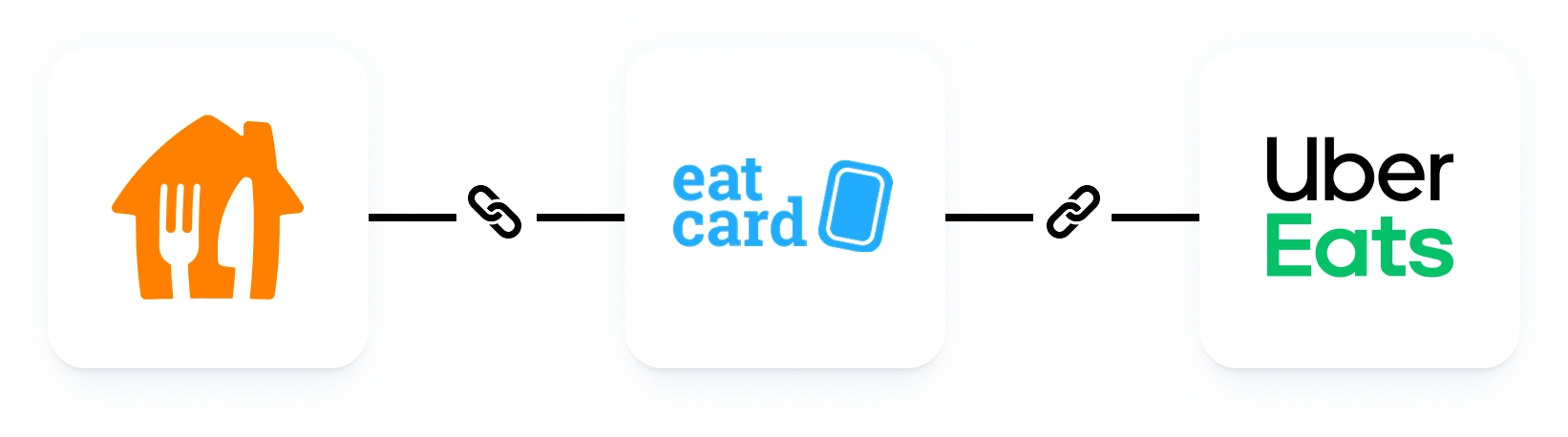
Delivery integration connects your external delivery channels directly to your POS system, so every order lands in one place. With Eatcard, platforms like Uber Eats and Thuisbezorgd integrate seamlessly, which means you never switch between screens again.
Instead of a row of tablets on the counter, you get a single system that receives, prints and tracks every order, no matter which platform it came from. It becomes one more channel in your restaurant order flow. Here is why that matters.
Benefit 1: All your orders in one place
The most immediate benefit is simplicity. No more switching screens, no more scanning three devices to see what is coming. Every order, whether it comes from Uber Eats, Thuisbezorgd or your own counter, arrives directly in Eatcard.
For your staff, that means one workflow to learn and one place to look. For you, it means your whole operation runs through a single system instead of a patchwork of apps that do not talk to each other.
Benefit 2: Straight to the kitchen, no double work
Without integration, delivery orders have to be read off a tablet and retyped into the kitchen system. That is slow, and it is exactly where mistakes creep in.
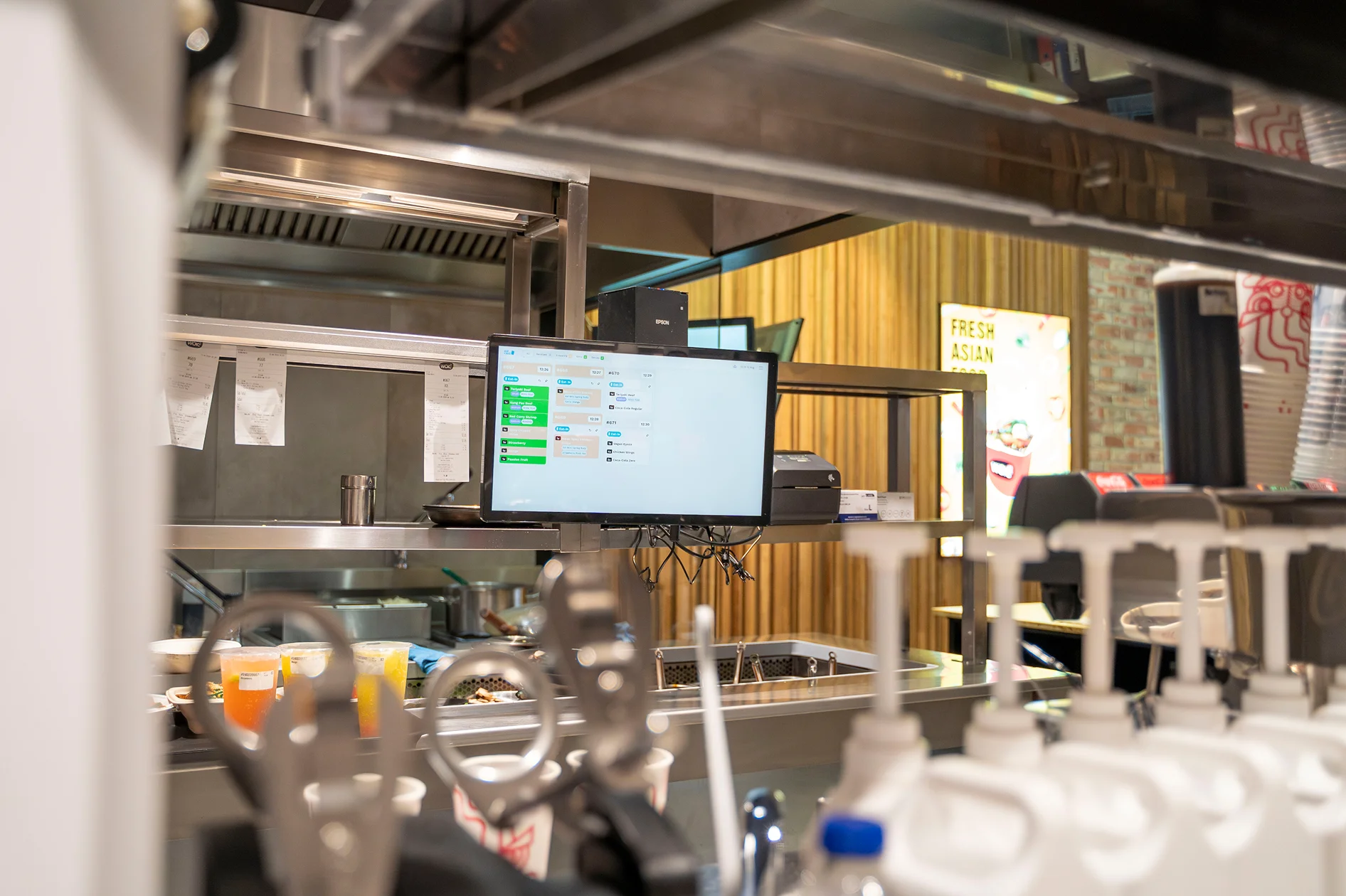
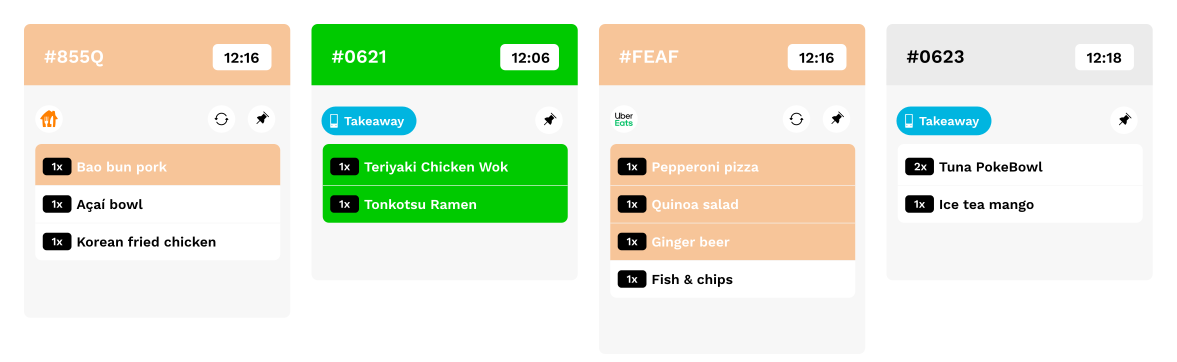
With delivery integration, orders go straight to your kitchen printer or Kitchen Display System automatically. Your team starts the moment an order comes in, with no manual re-entry and no waiting. On a busy night, those saved seconds add up to real capacity.
Benefit 3: Fewer mistakes, more control
Every time an order is copied by hand, there is a chance to get it wrong: a missed item, a wrong address note, a forgotten allergen. Centralizing your orders removes that step entirely.
Because all your data flows through one system, you get full visibility over your entire operation. Fewer moving parts means fewer errors, and a clear overview means you always know what is happening across every channel at once.
Benefit 4: Real-time status for staff and guests
Delivery only works when everyone stays informed. With integration, order statuses are synchronized and updated in real time, all managed from one place.
Your kitchen knows what stage each order is at, your staff sees progress without asking, and your customers stay up to date on their delivery. That transparency keeps service calm and cuts down on the “where is my order?” moments that eat into your team’s time.
Benefit 5: Every order clearly labeled
When orders from different platforms arrive in one system, your team needs to know at a glance where each one came from. That is why every order is tagged with the delivery platform’s logo.
One look tells your staff whether an order is Uber Eats, Thuisbezorgd or in-house, so they handle it the right way without second-guessing. It is a small detail that keeps a busy kitchen moving.
Delivery, made simple
Delivery should grow your business, not add chaos to your kitchen. Delivery integration takes the friction out of running multiple platforms by bringing every order into one system, sending it straight to the kitchen, and keeping staff and guests informed the whole way through.
And once the platforms run through your own system, the next step becomes easy too: your own takeaway webshop on the same platform, where orders arrive commission-free in exactly the same flow.
Want to bring all your delivery orders into one system? Book a demo and see how Eatcard’s delivery integration works for your restaurant.
In this article
Streamline Ordering on Your Terrace
A smooth terrace experience starts with easy ordering. With Eatcard QR Table Order, guests can browse the menu and place orders directly from their table. No waiting, no queues, just fast, accurate service. Combine this with Eatcard Waiter handheld devices to allow staff to take orders and process payments on the spot, keeping service seamless even during peak hours.
Keep Kitchen and Bar Efficient
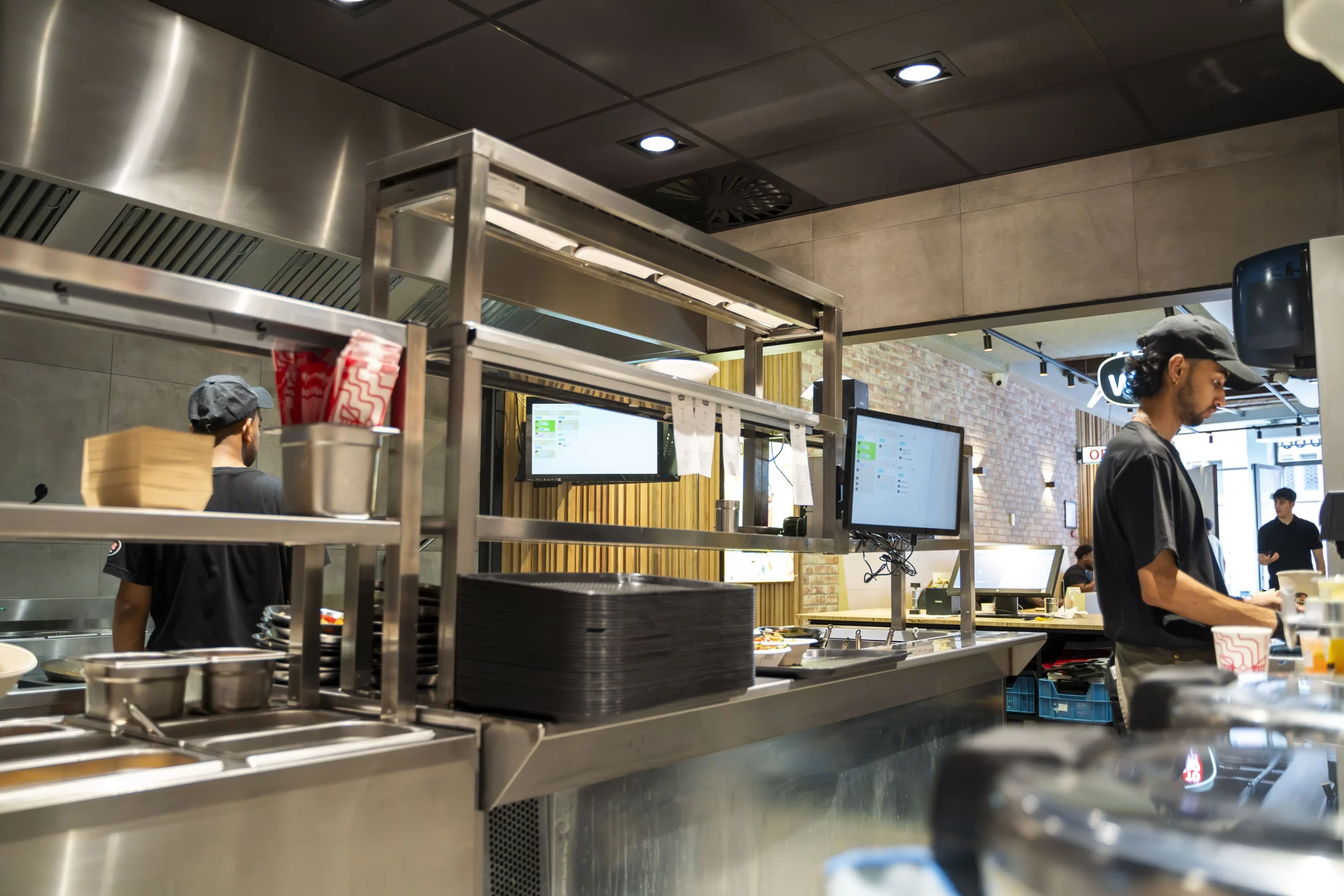
On busy summer days, efficiency behind the scenes is crucial. Eatcard’s KDS (Kitchen Display System) ensures all orders are displayed digitally in real time. Chefs and bartenders can track, prioritize, and prepare orders accurately without paper tickets, minimizing mistakes and speeding up service. The combination of QR Table Order, Eatcard Waiter, and KDS creates a fully integrated workflow that keeps the whole team coordinated.

Seasonal Dishes and Drinks Made Easy
Summer menus are all about freshness and variety. With Eatcard, updating your offerings, whether it’s light salads, colorful bowls, BBQ items, or refreshing summer drinks, is simple. Guests can order seasonal specials quickly via QR codes, while your kitchen and bar staff stay on top of every request thanks to KDS.
Make Summer 2025 Your Best Season Yet
With Eatcard, you can optimize terrace operations, boost service speed, and keep guests happy, even during peak hours. Whether you run a café, casual dining spot, or busy street-food terrace, Eatcard ensures your summer season is smooth, efficient, and memorable.